
Founder • 1782 — 1861
St. Eugene
de Mazenod
"Practice well among yourselves charity, charity, charity, and outside, zeal for the salvation of souls"
Founder • 1782 — 1861
"Practice well among yourselves charity, charity, charity, and outside, zeal for the salvation of souls"
We are living in the second Advent of the world's history. Eugene de Mazenod was a man of Advent, a man of the Coming. He not only looked forward to that Coming, he dedicated his whole life to preparing for it.
Pope John Paul II
Canonization Homily, December 3, 1995
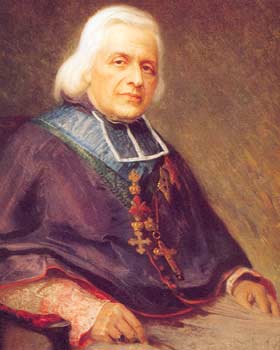
Aix-en-Provence, 1782
Charles Joseph Eugene
Son of Charles Antoine de Mazenod & Marie-Rose Joannis
Father: Charles Antoine de Mazenod
President of the Aix Parliament, French nobility
Mother: Marie-Rose Joannis
Bourgeois merchant class, practical and shrewd
1782 — 1790
Eugene of Mazenod was born in Aix-en-Provence in France in 1782, the son of wealthy aristocratic parents. This union of complementary social and cultural values — nobility and bourgeois practicality — assured young Eugene all the requisites for a successful and comfortable life.
This idyllic world was swept away by the French Revolution in 1789. After his father opposed the revolution, the entire family was obliged to flee into exile in Italy.
In 1790, a new painful period began for Eugene. These were years of family instability, material scarcity and danger. The family was forced to flee successively to:
Turin
Venice
Naples
Palermo
Eugene's adolescence was impoverished. Deprived of friends of his own age, unable to continue an orderly academic program, he was also separated from his mother who divorced her husband in order to return and reclaim family property in France.
It was there that my vocation to the priesthood was born.
— Eugene de Mazenod, on his time in Venice with Don Bartolo Zinelli
During his time of exile in Venice (1794-1797), a holy priest, Don Bartolo Zinelli, introduced him to the spirituality of the Company of Jesus. From him as a young boy, Eugene learned how to pray and how to practice mortification. Don Bartolo also initiated him to a devotion to the Virgin Mary.
1802 — 1811
Eugene was 20 years old when he returned from exile. His overriding desire was to live fully, to make up for lost time.
Young, handsome, with a well-known family name and inherited wealth recovered by his mother. His ambitions: Marriage with a young rich heiress, a secure and prestigious position in society, and access to the pleasures of the good life.
These dreams crumbled one by one starting with the unexpected death of the wealthy young woman. Eugene, now 25, was forced to make a new balance of his life. Superficial friendships and the easy pleasures of high society living were found empty and wanting.
1807 — 1808
During the adoration of the cross on Good Friday in 1807, Eugene had a special experience of the love and goodness of Christ which culminated in the shedding of his blood to obtain the forgiveness of all sins.
Simultaneously conscious of his own sins and filled with a sense of profound confidence in Divine Mercy, Eugene decided to make amends through the total gift of his life to Jesus his Savior.
A second moment of grace, which he describes as "an impulse from without" from the Spirit, led him to a decision for the priesthood.
In 1808, he would enter the Seminary of Saint Sulpice in Paris and be ordained a priest at Amiens, on December 21, 1811.
1808 — 1815
His dream was to be "the servant and priest of the poor". From 1808 to 1812 as a member of the Seminary of Saint-Sulpice in Paris, Eugene de Mazenod was guided by Monsieur Emery and Monsieur Duclaux. These holy men encouraged Eugene to continue developing a spirit of fervor, regularity and industriousness.
Eugene, notwithstanding personal risk, committed himself to faithfully serve and assist the Pope who at this time was a prisoner of Napoleon at Fontainebleau.
Direct contact with impoverished youth and prisoners of war strengthened Eugene's desire to devote himself entirely to these forgotten people. Simultaneously he continued to harbor a desire to make atonement, both for his own sins and all Christians who had abandoned the Church.
Thus he participated in the activities of the Marian Congregation and a missionary group established by his friend and confrere Charles de Forbin-Janson. Repeatedly he expressed the desire to cooperate with Christ in the salvation of the world.
He participated in the Marian Congregation and missionary groups, expressing repeatedly the desire to cooperate with Christ in the salvation of the world.
Direct contact with impoverished youth and prisoners of war strengthened his desire to devote himself entirely to these forgotten people.
Guided by Monsieur Emery and Monsieur Duclaux, developing a spirit of fervor, regularity and industriousness.
1815 — 1826
Eugene began his ministry by rejecting a prestigious diocesan position to reach out to the poor, the workers, the youth, the sick and the imprisoned of Aix.
1815
September
He experienced another "impulse from without" that set him firmly on the path of apostolic action. He gave himself body and soul to the realization of his plans to establish a society of missionaries.
On January 25, 1816, the society of the Missionaries of Provence was born. Father de Mazenod invited his companions "to live together as brothers" and "to imitate the virtues and examples of our Saviour Jesus Christ, above all through the preaching of the Word of God to the poor".
"Their fondest wish was to embrace the vast expanse of the whole earth"
1816
January 25
1818
Founder's Vision
As the founder had written: their fondest wish was "to embrace the vast expanse of the whole earth". Though initially limited to the neighboring countryside due to their small number, their vision was global from the start.
Pope Leo XII on February 17, 1826 formally approved the newly founded Congregation of the Missionary Oblates of Mary Immaculate.
"He has sent me to evangelize the poor"
— Motto expressing both charism and way of life
1826
February 17
1827 — 1836
Internal and external struggles testing his resolve
The pain of losing companions along the way
Personal loss and the weight of leadership
From 1827 to 1836, Eugene was tested time and time again: conflicts, defections, bereavements, temporary loss of his French citizenship, even suspicion from the Holy See. Along with making him seriously ill, these events led to moments of discouragement and depression.
Eugene discovered, first hand, the cost of discipleship and service of the Church. He came out of this experience bruised and humbled, more understanding towards others and much stronger in his love and faith.
1837 — 1861
The Diocese of Marseille had been re-established in 1823. After a period as Vicar General of this diocese, in 1837, Eugene was named Bishop of Marseille.
As pastor of a Church undergoing a time of significant growth and simultaneously Superior of a fledgling group of missionaries, Bishop Eugene de Mazenod truly had to be "all things to all people".
Increased parishes & religious associations
Special programs for youth & workers
Welcomed Jesuits & new religious families
New cathedral & Notre Dame shrine
In 1854, he journeyed to Rome to participate enthusiastically in the proclamation of the Immaculate Conception on December 8 — a doctrine particularly dear to the Oblates.
Source of Inspiration
"The Eucharist was his source of inspiration and renewal. He insisted on celebrating Mass daily, sometimes at great inconvenience, particularly while traveling."
"The Eucharist, his privileged place of identification with Christ was also the space for gathering together friends and members of his religious family."
"While identifying ourselves with Jesus Christ, we shall be at one with him, and by him and in him we shall be at one among ourselves."
— St. Eugene de Mazenod
1841 — 1855
After accepting a mission in neighboring Corsica in 1834, starting in 1841, the small Society began a period of great expansion.
1841
Canada
First mission abroad
1842
England
European expansion
1847
USA
American mission
1847
Ceylon
Sri Lanka today
1851
South Africa
African mission
1855
Ireland
Return to roots
Although he never traveled beyond the borders of Europe, with the exception of a short trip to Algeria, Saint Eugene nurtured in his heart a concern for all the churches.
A visiting bishop remarked after meeting Saint Eugene: "I have met the apostle Paul"
His Teaching
De Mazenod's most basic attitude before humanity is one of trust and faith. Two very solid convictions explain this attitude.
Everything which occurs on earth, on the personal as well as the civil and social level, depends on Divine Providence.
God wants all to be saved, and all, both rich and poor, have been purchased by the blood of Christ.
"We must strive first of all to lead people to act like human beings, and then like Christians, and finally, we must help them to become saints."
"No matter how poor or destitute they might be, in the eyes of faith all are 'children of God', 'brothers and sisters of Jesus Christ' and 'heirs of His eternal kingdom.'"
Holiness consists in conversion of heart, fidelity to the law of God and to the inspiration of his grace, in the knowledge and love of Jesus Christ.
The journey to holiness demands a constant ongoing conversion. To love Jesus Christ is to love the Church.
His Gift to Us
Saint Eugene's spiritual synthesis is found most clearly in the Rules and Constitutions of his Institute. These reflect both his own personal experience and the perception of the needs of the day.
The spirit of total devotion for the glory of God, the service of the Church and the salvation of souls is the spirit proper to our Congregation.
— 1817
We must look upon ourselves as the servants of the Father of a family commanded to succor, to aid, to bring back his children by working to the utmost, in the midst of tribulations, of persecutions of every kind, without claiming any reward other than that which the Lord has promised to faithful servants who have worthily fulfilled their mission.
— 1830
Influences in writing the Constitutions:
1861
Towards the end of his life, Eugene had become very free. Faced with the prospect of becoming a Cardinal which had been promised and which slipped away from him because of political considerations, he had this to say:
"After all, it is all the same whether one is buried in a red cassock or a purple one; the main thing is that the bishop gets to heaven."
Pentecost Sunday
Shortly before his death, in keeping with his temperament, the elderly and seriously ill bishop said to those around him:
"Should I happen to doze off, or if I appear to be getting worse, please wake me up! I want to die knowing that I am dying."
Practice well among yourselves charity, charity, charity, and outside, zeal for the salvation of souls.
— His Last Words to the Oblates
Saint Eugene died on Pentecost Sunday to the prayer of the Salve Regina. It was his final salute on earth to the one he considered as the "Mother of the Mission".
December 3, 1995
Rome, Italy • Pope John Paul II
We are living in the second Advent of the world's history. Eugene de Mazenod was a man of Advent, a man of the Coming. He not only looked forward to that Coming, he dedicated his whole life to preparing for it, one of those apostles who prepared the modern age, our age.
Eugene de Mazenod knew that Christ wanted to unite the whole human race to himself. This is why throughout his life he devoted particular attention to the evangelization of the poor, wherever they were found. By patiently working on himself, he learned to discipline a difficult character and to govern with enlightened wisdom and steadfast goodness.
His every action was inspired by a conviction he expressed in these words: "To love Church is to love Jesus Christ, and vice versa". His influence is not limited to the age in which he lived, but continues its effect on our time.
His apostolate consisted in the transformation of the world by the power of the Gospel of Jesus Christ. What Saint Eugene wanted to achieve was that, in Christ, each individual could become a fully complete person, an authentic Christian, a credible saint.
The Church gives us this great Bishop and Founder of the Oblates of Mary Immaculate as an example of heroic faith, hope and charity.
Pope John Paul II